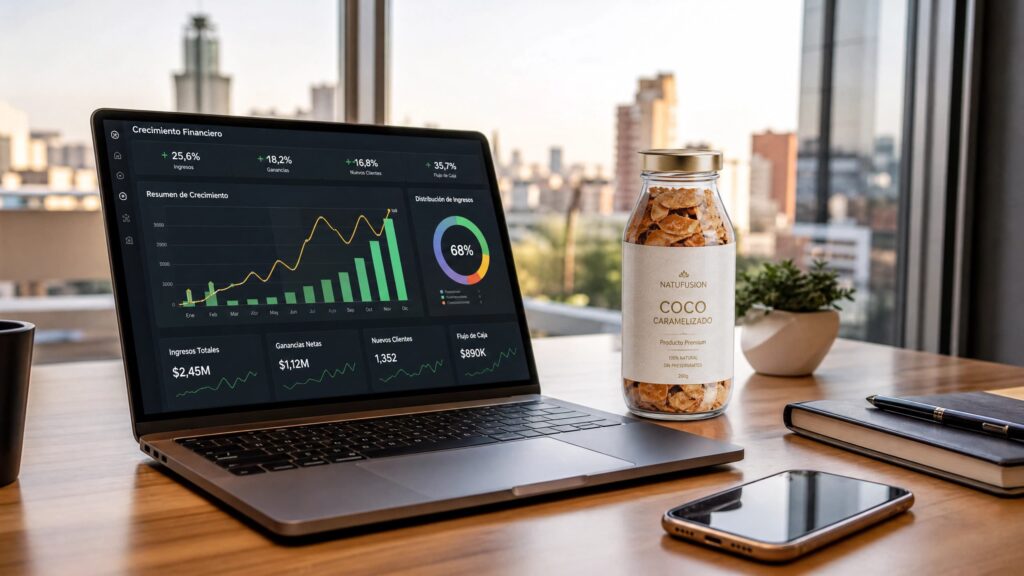
Open Your Company in 72 Hours and Pay Only 1% Tax: The Food Revolution in Paraguay
Are you a small or medium business owner in Latin America or Europe? You are probably tired of the same old hurdles. Endless bureaucracy delays your projects. Heavy tax regulations suffocate your profit margins. Meanwhile, opening a corporate bank account takes months.
International expansion used to be an exclusive privilege. Only multinationals with massive budgets could afford it. However, the investment map in South America has completely shifted. One country decided to break the rules of the bureaucratic game. That country is Paraguay. It is now the ultimate safe haven for SMEs.
Other nations debate tax increases and labor rigidity. In contrast, Paraguay offers a dream ecosystem for entrepreneurs. You can set up a company 100% digitally. It will be fully operational in just three days. Best of all, you do not need minimum capital. You also get access to an export regime with a flat 1% tax.
This is not macro-economic theory. It is a live legislative reality in this year 2026. The system is tailored for the Processed Food Sector and Value-Added Agro-industry. Paraguay already excels at exporting raw commodities like soybeans or beef. However, the true opportunity lies in local transformation. The country actively rewards those who process and package food within its borders.
Below, we break down the legal tools, statistics, and real testimonials. Discover why this opportunity is unbeatable for your next business venture.
1. Goodbye to bureaucracy: The miracle of Simplified Share Companies (EAS)
Until very recently, establishing a legal presence in Paraguay implied an old-school traditional process. You had to choose between a Stock Corporation (S.A.) or a Limited Liability Company (S.R.L.). This translated into hiring expensive draftspersons and mandatory visits to a public notary. Furthermore, you had to wait months for approval from the Ministry of Finance. It also required depositing an obligatory initial capital in the bank to prove solvency.
For a large corporation, this is just another routine step. For an SME, it is a barrier that can consume its initial resources. All of this became history thanks to the enactment of Law No. 6480/2020. This law gave birth to EAS (Simplified Share Companies). This legal entity has democratized foreign investment. It levels the playing field for small and medium-sized entrepreneurs.
Why is the EAS structure a true operational revolution?
- 100% Digital and Remote Incorporation: Forget about emergency flights and endless in-person procedures at state offices. The entire opening process is managed through the SUACE platform. By adopting the model bylaws approved by the Ministry of Industry and Commerce (MIC), the system validates the information automatically. This eliminates the need to visit a local public notary.
- Record Speed of 72 Hours: The system is designed so that your company is legally born within approximately three business days. You obtain your tax identification number (RUC) immediately. You also receive your stamped bylaws and the legal authorization to operate. This timeframe would seem like science fiction in other countries in the region.
- Zero Minimum Capital: This is one of the greatest advantages for protecting your cash flow. You can incorporate your EAS with a symbolic initial capital starting from just one dollar. This allows you to establish the legal structure of the business first. Then you can open the commercial channels for your food brand. You make real financial contributions as the operation requires, without freezing funds from day one.
- Full Single-Member Control: Traditionally, commercial laws forced you to find a local partner to open a company. With the EAS, you can be the sole owner and founding shareholder through a Single-Member EAS. The investor retains absolute control over strategic decisions. Simultaneously, this shields personal assets, as legal liability is strictly limited to the capital contributed.
The Central Bank of Paraguay (BCP) has also taken action. It issued specific resolutions for financial institutions to streamline the opening of corporate bank accounts under this regime. The State’s objective is clear. They want to eliminate bureaucratic obstacles. This allows you to focus on producing and marketing your products.
2. The best-kept secret: The 1% Food Micro-Maquila Regime
The speed of the EAS Law is attractive. However, the tax aspect of Law No. 1064/97 on the Export Maquila Industry turns Paraguay into a global competitive paradise. The concept of “Maquila” is often wrongly associated with massive textile factories. However, Paraguayan legislation has successfully adapted this model to small and medium scales through Micro-Maquila.
What exactly does this benefit focused on processed foods consist of? Imagine that you set up a small industrial plant or a packaging center in Paraguayan territory. Under the maquila regime, you can import raw materials, essences, packaging, labels, or industrial machinery. This is done with a total suspension of customs duties from anywhere in the world.
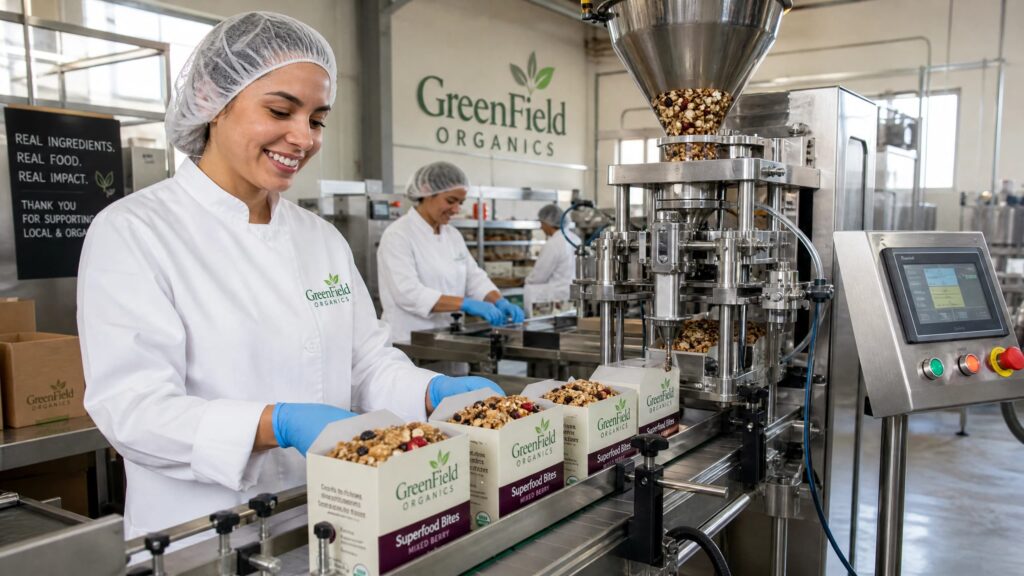
Once those inputs arrive at your industrial warehouse in Paraguay, your local team processes the product. You can package premium nuts or produce energetic cereal bars. You can also mix organic yerba mate with medicinal herbs, manufacture healthy snacks, or prepare frozen foods. When the finished product leaves Paraguay bound for international markets, the fiscal miracle occurs.
- Total Exemption and 1% Single Tax: Your company falls completely outside the ordinary tax regime. You do not pay Income Tax in a traditional way. You do not face complex withholdings on export billing. Instead, the Paraguayan State applies a single flat tax of 1%. This is calculated directly on the value of the export invoice or on the value added locally. It is a token tax rate that allows you to reinvest almost all of your net income.
Strategic advantages that skyrocket your SME’s profitability:
- Duty-Free Temporary Admission: Import glass jars, special lids, or exotic ingredients without paying entry customs duties. This keeps your production costs under control.
- Full Refund of VAT Credit: All VAT paid on your local operational purchases is returned to you. This includes items like industrial electricity or cardboard boxes. It is refunded through usable Tax Credit Certificates.
- Zero Tariff within Mercosur: By processing the product in Paraguay, you obtain an official Certificate of Origin. This allows you to cross the borders of giants like Brazil or Argentina with zero import tariffs. This strategy crushes local competition prices.
3. Hard data and official statistics: The engine of growth
Combining the EAS structure and the Maquila Law is not a pilot project. It is the spearhead of the Ministry of Industry and Commerce (MIC) to attract capital in this year 2026. Macroeconomic data from the National Council of Export Maquila Industries (CNIME) reflects unprecedented growth:
- Historical Export Record: The maquila industry in Paraguay has surpassed the barrier of 1 billion dollars in annual exports. This consolidates agro-industry and processed food manufacturing as the country’s third strongest sector.
- Absolute Preference for EAS: More than 60% of new industries and service SMEs established in the country choose the Simplified Share Company format. They select it due to its speed and lack of bureaucracy during setup.
- Secure Commercial Destination: 70% of the production of these micro-maquilas is directed straight toward satisfying consumption in Brazil. This is followed by Argentina and the United States. This positions Paraguay as the efficient factory of Mercosur.
4. Real success stories: From regional SME to international market
The viability of this model is proven through the cases of SME entrepreneurs who are already actively operating and billing under these laws in Paraguay:
Case 1: The snack and cereal bar manufacturer.
A small family business with roots in Chile and Argentina sought to expand its production of energetic cereal bars and premium nut mixes. After analyzing high regional costs, they incorporated a Single-Member EAS company 100% digitally. Without freezing capital in notary procedures, they rented a small industrial warehouse in the Limpio area (Greater Asunción). They imported light machinery and plastic packaging from Asia under the Maquila tariff suspension. Today, they buy raw materials like peanuts, sesame, and chia directly from local agricultural producers at competitive costs. They process the snack in the country and export it packaged to supermarket chains in the state of Paraná, Brazil. They only pay a 1% tax on their export invoices.
Case 2: The “Time-to-Market” testimonial in Blended Yerba Mate
A group of Brazilian entrepreneurs designed a line of iced teas and blended yerba mate infused with tropical fruits for the European market. Their operational experience highlights the speed of the Paraguayan system. At the Paraguayan Industrial Union (UIP) meetings, the founders stated: “What would have taken us six months of bureaucracy, notary blocks, and enormous expenses in law firms in São Paulo, we had running in days in Paraguay. The EAS granted us the RUC in a week. We signed the plant lease contract immediately. The pilot project was approved under the Maquila regime in less than two months.”
Case 3: Tariff arbitrage in Nutritional Supplements
An SME imports bulk collagen and isolated proteins directly from the European Union. When entering the bulk raw material into their plant in Paraguay under the Maquila scheme, the process is exempt from import tariffs. At the plant, they perform quality control and sub-packaging into retail design jars. They also handle regulatory labeling in Portuguese and add local flavorings. By doing this process in the country, the finished product qualifies for the Mercosur Certificate of Origin. Thanks to this, the product enters Brazil with zero tariff. It avoids the heavy Common External Tariff (CET) it would pay if sent directly from Europe. This allows them to compete in the Brazilian market with a 30% lower price.
5. The backup plan for the internal market: The “Triple 10” tax system
What if your commercial goal is not to export, but to capture the internal consumption of Paraguayan cities? The growth of the middle class and urban development in Asunción, San Lorenzo, Luque, and Ciudad del Este have triggered demand. There is a boom in specialty coffee shops, gourmet burger joints, and local healthy food brands. If you decide to sell your processed products within the local market, you operate under the country’s ordinary General Regime through the flexible “Triple 10” structure:
- Corporate Income Tax (IRE) at 10%: A fixed and flat rate on your company’s annual net profits, without progressive brackets that penalize growth.
- Value Added Tax (VAT) at 10%: General rate for the sale of processed goods and commercial services. There is also a reduced rate of 5% for purchasing certain agricultural products in their natural state, lowering your raw material costs.
- Balanced Dividend Tax (IDU): Profit withdrawals with a tax of only 8% for residents in the country, and 15% for non-resident (foreign) partners.
Legal Audit and Compliance Note
This benefit does not constitute a loophole or an evasion scheme. The 1% Single Tax is fully guaranteed by Article 30 of Law No. 1064/97 of the Export Maquila Industry. The Ministry of Industry and Commerce of Paraguay and CNIME audit EAS-Maquila companies monthly. They certify that 100% of imported raw materials are transformed and effectively exported. This ensures total transparency and legality of the process before international banking.
The combination of being able to incorporate an EAS society quickly in 72 hours, added to the possibility of exporting value added to the world paying a token 1% tax, sets up a strategic scenario that is not found anywhere else in the region in this year 2026. The success of your next agro-industrial or gastronomic investment no longer depends on the bureaucracy of your country of origin. It depends on the speed with which you decide to take the step.
Take the leap to Paraguay and shield your profit margins today
Do not let traditional bureaucracy halt your food brand’s expansion. Our legal team handles auditing, preparing, and processing your EAS company setup completely remotely. We ensure you can access the maximum tax benefits of the Micro-Maquila regime from day one. Click here and book your strategic consultation with our corporate advisors to start your expansion in Paraguay.

