The Automotive Sector in Paraguay 2026: The “Automotive Miracle” of Paraguay
Paraguay has successfully transitioned from being perceived solely as a commercial transit hub to a solid, high-yield investment destination in the heart of the Southern Cone. In 2026, the automotive sector accounts for approximately 12% of the commercial GDP, driven by a level of monetary stability that is the envy of the region and demographic growth that is pushing mobility demand to record levels.
For the small and medium-scale investor, this market offers a unique characteristic: a low tax burden combined with almost total freedom of capital flow. However, entering this sector requires more than just capital; it demands a deep understanding of a vehicle fleet that already exceeds 2.8 million units and is currently undergoing an unprecedented technological transformation.
I. Market Analysis: Figures, Trends, and Real Value
The Paraguayan automotive market is not a monolithic block; it is divided into distinct compartments with very different growth dynamics.
1. The Value of Imports
Paraguay annually imports vehicles with a total value ranging between USD 650 and USD 850 million. This flow is divided into two main categories that every investor must distinguish:
- New Vehicles (Direct Import): This segment is dominated by the Chamber of Distributors of Motor Vehicles and Machinery (CADAM). In 2026, Asian brands (Kia, Hyundai, Toyota) and American ones (Chevrolet) maintain their leadership. However, there has been an aggressive disruption by high-end Chinese brands, which have captured 15% of the market in just 24 months by offering premium technology at competitive prices.
- Used Vehicles (Via Iquique/Chile): This is the true engine of the middle class. It represents 60-70% of the total volume of units entering the country. Although stricter 2026 environmental regulations regarding engine age are in place, the turnover of “used car lots” (playas de autos) remains massive, moving over USD 400 million per year in resales.
2. Growth Trends
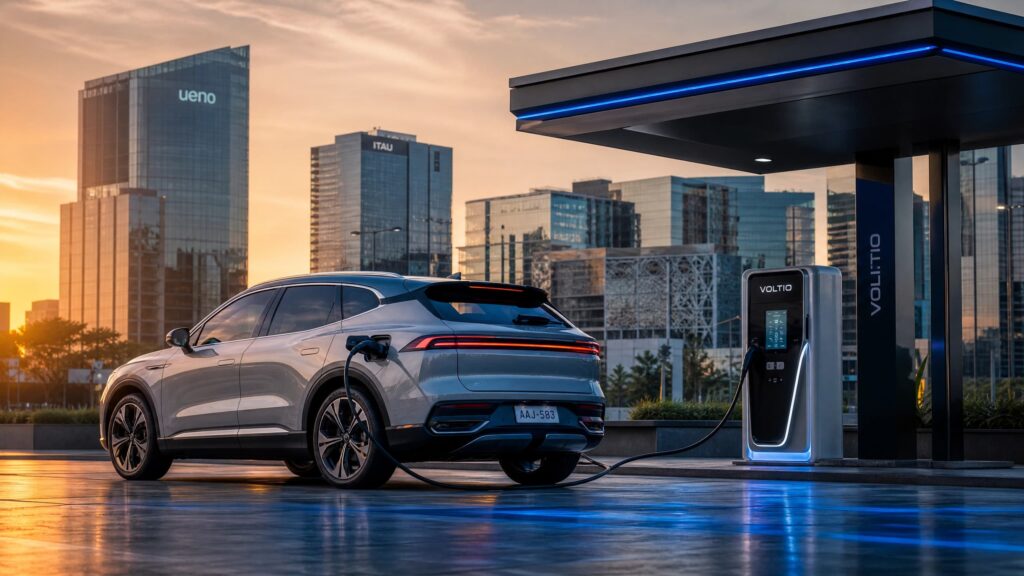
The sector is growing at an annual rate of 5% to 8%. However, the most disruptive trend this year is electrification. Thanks to the abundance of clean and cheap energy from the Itaipú and Yacyretá hydroelectric plants, the government has implemented aggressive tax incentives. Electric and hybrid vehicles now represent 10% of new registrations—a niche that remains “virgin” in terms of specialized maintenance and infrastructure services.
II. The Investment Map: Business Breakdown and Profitability
For an investor with a medium capital range (between USD 50,000 and USD 300,000), the options are diverse. Here we analyze the real-world viability of each business unit:
1. The Used Car Lot (A Financial Business)
This is the classic entry point. A recommended initial investment for a competitive lot is USD 70,000 to USD 150,000.
- The Profit Secret: In Paraguay, selling a car for cash leaves a relatively small margin (10-15%). The true business lies in in-house financing. By selling in 24 to 36 installments, the annual Return on Investment (ROI) can jump to 30-40% due to interest rates and the retention of the vehicle lien (chattel mortgage).
- Risk: High competition and the need for a solid legal team to manage collections and title transfers.
2. Specialized Technical Workshops
Investment: USD 30,000 to USD 80,000. The vehicle fleet is both aging at its base (used imports) and becoming more sophisticated at its peak (high-tech 0km). There is a massive gap for workshops offering:
- Advanced computerized diagnostics.
- Hybrid and EV battery maintenance.
- ADAS (Advanced Driver Assistance Systems) calibration. A certified workshop in Asunción or Ciudad del Este currently faces waiting lists of up to 15 days, highlighting a severe lack of qualified supply.
3. Spare Parts and Auto Parts Sales
Investment: USD 50,000 to USD 200,000. Paraguay is a “brand-loyal” market. If an investor secures the distribution of high-quality or original parts for specific brands (e.g., specialized Korean or Chinese parts), the cash flow is constant. Profit margins in spare parts typically range from 40% to 60%, significantly higher than the sale of the vehicle itself.
4. Gas Stations (Service Stations)
Investment: USD 400,000 to USD 1.2M. This is a high-volume, low-margin-per-liter business. In 2026, the success of a gas station in Paraguay depends 40% on its Convenience Store. Paraguay has a strong social culture revolving around “after-office” meetups at gas stations. Without a powerful store, the fuel business is purely logistical and less profitable for a medium investor.

III. The Sleeping Giant: Agricultural and Construction Machinery
One cannot discuss the automotive sector in Paraguay without mentioning the Agro-industry. Paraguay is the world’s 4th largest soybean exporter and a livestock giant.
- Market Value: Machinery imports exceed USD 450 million annually.
- Opportunity: While major distributors dominate new sales, machinery leasing and on-site technical services in rural areas are niches where medium investors are finding extremely high returns. A tractor breakdown during harvest costs thousands of dollars per hour; technical efficiency is paid for at a premium.
IV. Strategic Geography: Where to Place the Capital
Location in Paraguay determines your customer profile:
- Asunción and Greater Asunción: A market for SUVs, luxury cars, and EVs. Customers here value status and premium after-sales service.
- Ciudad del Este / Alto Paraná: The logistics heart. Ideal for import and wholesale distribution of parts. High volume of light vehicles due to cross-border trade.
- Encarnación / Itapúa: A high-purchasing-power zone linked to agro-business. This is the kingdom of Pick-ups (Hilux, Amarok, Ranger).
- The Chaco and the Bioceanic Corridor: The greatest opportunity for land appreciation and service demand. The Bioceanic road connects Atlantic and Pacific ports; this will generate a massive need for industrial tire shops, rest stops, and hydraulic repair shops.
V. Legal and Immigration Aspects for Investors
Paraguay is one of the few countries that allows a Temporary Resident to operate fully.
1. Temporary Residency (Law 6984/22)
With your temporary ID (Cédula), you can open an EAS (Simplified Share Company). This model allows:
- A single shareholder (sole proprietorship) or multiple partners.
- Incorporation in 72 business hours.
- 100% foreign ownership.
2. The SUACE Program
If your investment exceeds USD 70,000, it is highly recommended to use the Unified System for Opening and Closing Companies (SUACE). This grants you Direct Permanent Residency and fast-tracks all municipal and government permits. Permanent residency is vital for financial leverage, as local banks are often reluctant to grant long-term credit to temporary residents.
VI. Tax Structure: The Competitive Advantage
The Paraguayan system is famous for the “Triple 10”:
- VAT (IVA): 10%.
- Corporate Income Tax (IRE): 10%.
- Personal Income Tax (IRP): 8% to 10%. Compared to the 30-35% seen in neighboring Argentina or Brazil, Paraguay allows for much faster capital reinvestment.
VII. Strategic Recommendation
The automotive sector in Paraguay 2026 is not for the unprepared, but it rewards the specialist generously. The path to success for a moderate capital investor is clear:
Do not compete on price by selling the cheapest car; compete on service by selling the technical solution. The arrival of high-tech vehicles and the expansion of national highways have created a demand for quality service that current supply cannot meet. Paraguay is, today, the most profitable logistical and repair hub in the region for those who know how to read the market signals.

