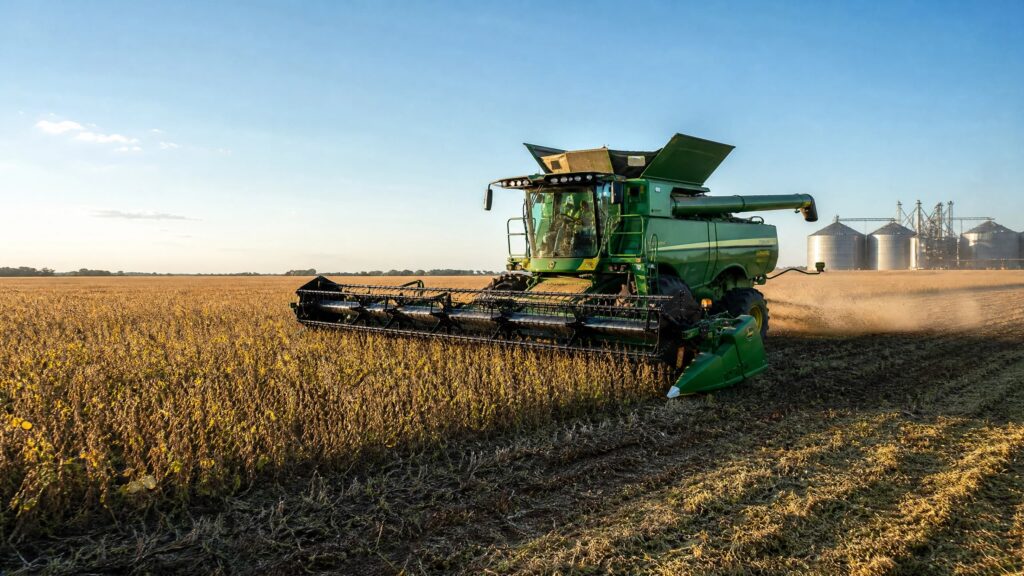
The Soy Sector in Paraguay is Literally the Engine that Defines the Country’s Gross Domestic Product (GDP)
The Soy Sector in Paraguay is a highly professionalized, dynamic, and globally connected business.
Below is a complete report with updated data for 2026.
Surface, Production, and Destination of Soy in Paraguay
The Paraguayan soy complex stands out globally for its efficiency. The country consolidates itself year after year among the top global producers and exporters.
- Cultivated hectares: Paraguay maintains a stable cultivation area. It ranges between 3.5 and 3.8 million hectares.
- Production volume: In a normal harvest season, production rounds between 9.5 and 10.5 million tons.
- Local consumption and industrialization: About 35% to 40% of the soy is processed within the country. Large local oil plants crush the grain into crude oil and pellets.
- Export: The remaining 60% to 65% is exported as raw grain. The main international destinations are Argentina, Brazil, the European Union, and various Asian markets.
Crop Cycles: How Many Harvests per Year?
Paraguay technically runs one major main harvest per year. However, land use includes a strategic second cycle.
- Main Harvest (Zafra): Farmers plant between September and October. They harvest between January and February. This stage concentrates the highest yield and volume.
- Small Harvest (Zafriña): Farmers plant immediately after the main harvest, between February and March. It has lower yields. It is used for seed production or soil cover.
Costs, Profitability, and Land Value (per Hectare)
The soy business operates in US dollars ($). This is due to international operating costs and sale prices.
Most Important Costs
The average production cost per hectare ranges between USD 650 and USD 800. The main items are:
- Fertilizers and crop protection: They represent about 40% of the total cost.
- Certified seeds and biotechnology: Around 15% of the budget.
- Fuel and mechanization: About 20% destined for soil preparation, planting, and harvesting.
Estimated Profitability
The average yield in Paraguay is 2,800 to 3,200 kg per hectare. Based on current international prices on the Chicago Board of Trade:
- Gross Profitability: It rounds between USD 1,100 and USD 1,300 per hectare.
- Net Profitability: After deducting direct costs, net profit sits between USD 350 and USD 500 per hectare on owned fields.
Ideal Terrain Characteristics
The best soils are located in the Eastern region. These are deep, well-drained loamy or clay-loam soils. The terrain requires a flat or slightly rolling relief for heavy machinery.
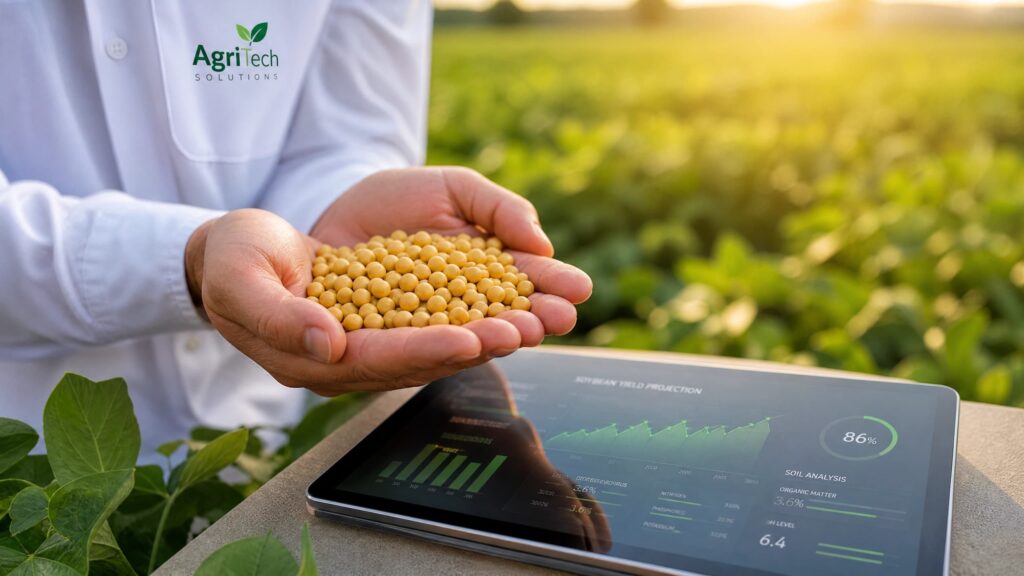
Cost of Land
The price varies drastically depending on infrastructure and the specific zone:
- Premium zones (Alto Paraná / Itapúa): A mechanized agricultural hectare trades between USD 8,000 and USD 12,000.
- Expansion zones (San Pedro / Caaguazú): Suitable lands can be found between USD 4,000 and USD 7,000 per hectare.
The Small Farmer: Can They Really Survive?
The reality of the sector is clear. Soy is a business of economies of scale. Hectare margins are small, so high volume is required for significant profits.
- Are sale prices based on international prices? Yes. The local price follows the Chicago Board of Trade (CBOT) minus freight and logistics costs (the basis).
- Do small producers get the same price? No. Large producers sell massive volumes directly to multinational exporters and get better prices. Small farmers sell through local intermediaries who charge a commission.
- Minimum production to survive: A family needs a minimum scale of 50 to 70 hectares of land. This scale generates an annual net income of USD 18,000 to USD 25,000.
The Productive Chain: Jobs, Services, and Investment Opportunities
Soy generates a massive ecosystem of indirect services. Medium and small investors can participate without buying land.
- Logistics and Transport: Paraguay has the third-largest barge fleet in the world. Truck transport from farms to river ports is a massive business.
- Storage and Gathering: Grain drying and preservation silos. Gathering companies classify and condition the soy before industrialization.
- Crushing and Industrialization: Production of vegetable oils, pellets, animal feed, and biodiesel.
- Mechanized Services (Agricultural Maquila): Many farms rent machinery. They hire third parties for direct sowing, spraying, and harvesting.
- Technical Advisory: Sale of inputs, soil analysis, environmental consulting, and precision agriculture.
Opportunities for Small and Medium Investors
The sector offers accessible alternatives to monetize capital without purchasing land:
- Livestock-Agricultural Investment Funds: The Asunción Stock Exchange (BVA) has specific investment funds. They rent land, plant soy, and distribute dividends.
- Input Financing: Investors can finance local producer cooperatives for seed and fertilizer purchases. They collect capital plus interest after harvest.
- Commodities Brokerage: Futures and options contracts operations are managed through local and international brokers to hedge against price volatility.
The Waterway as a Vital Artery
River logistics is the most critical factor for soy pricing in Paraguay. As a landlocked country, rivers are its true commercial highways.
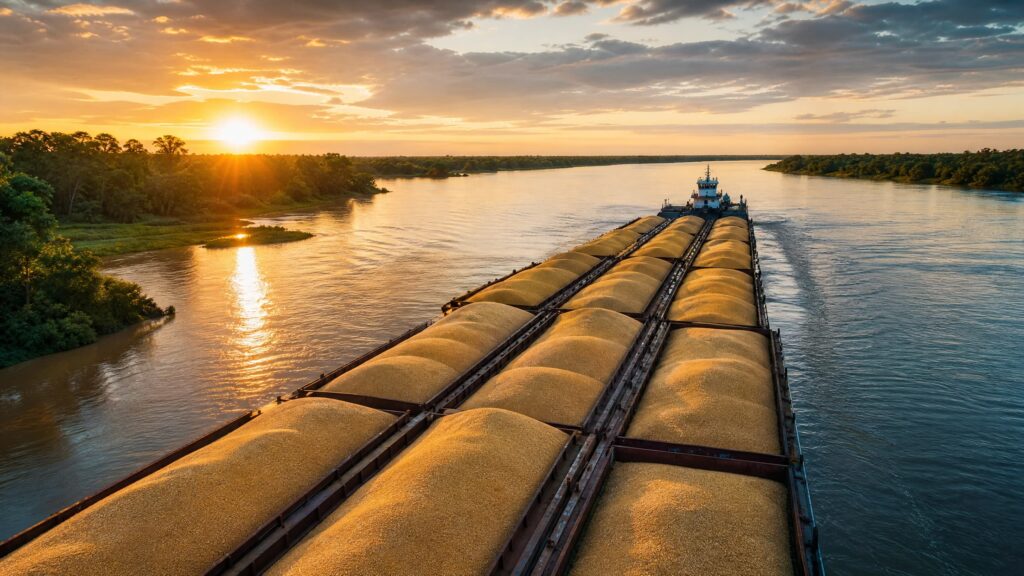
Paraguay exports most of its agricultural production by water. The Paraguay-Paraná Waterway is a natural corridor of over 3,400 kilometers. It connects Paraguayan river ports with deep-water ports in Argentina and Uruguay. From there, soy moves to ocean vessels heading to Europe and Asia.
River Freight Impact on Price (The “Basis”)
Paraguay soy pricing uses the Chicago Stock Exchange as a reference. However, local producers do not receive that full amount. A discount called the Basis is deducted from the price.
River freight is the main component of that discount. Transporting soy by barge to the ocean implies high fuel costs and port fees. In normal conditions, river freight subtracts between USD 30 and USD 50 per ton from the Chicago price.
The Climate Factor: River Lowlands
The river is a living resource and its flow changes with rainfall. Climate has a direct financial impact on freight costs.
Severe droughts cause low water levels in the rivers. Barges cannot navigate at full capacity. They must load 30% to 40% less grain to avoid running aground.
This causes two major problems:
- Higher cost per ton: More trips and more barges are needed for the same volume.
- Logistical delays: The trip becomes slower and generates penalties at transbordo ports.
Opportunities for Investors in this Ecosystem
This logistical challenge opens highly profitable business niches for medium and indirect investors:
- Shipyards and Maintenance: Barge and pusher repairs are in constant demand.
- Navigation Technology: Geolocation software and depth sensors are key for safe navigation.
- Private Ports: Investing in port silo infrastructure improves transport efficiency.
Technical Glossary of Soy in Paraguay
- Zafra: The main soy harvest campaign. In Paraguay, planting occurs in September and harvesting happens in summer.
- Zafriña: The second crop of the year or minor harvest. It is planted in autumn right after the main zafra.
- Basis: The difference between the Chicago Board of Trade price and the local price at Paraguayan ports.
- Chicago Board of Trade (CBOT): The world reference financial market. Its quotes set international grain prices.
- Soy “en Pozo” (Pre-sale): Advanced sale of the harvest. Farmers sell grain before planting to finance inputs.
- Acopio (Gathering): The process of collecting, drying, and storing soy in strategic silos before export.
- Commodity: A basic generic product with no differentiated value. Soy is the main commodity in Paraguay.
- Mechanization: The use of technology and heavy machinery in fields, including tractors and modern harvesters.
- Yield (Rinde): The amount of soy tons harvested per hectare. The national average is around 3,000 kilos.
- Origin Discount: Price reduction due to logistical costs. It directly affects the producer’s profit.

